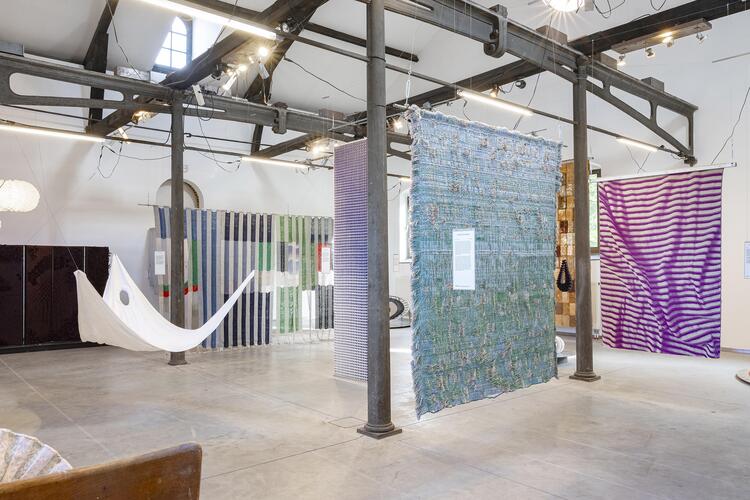
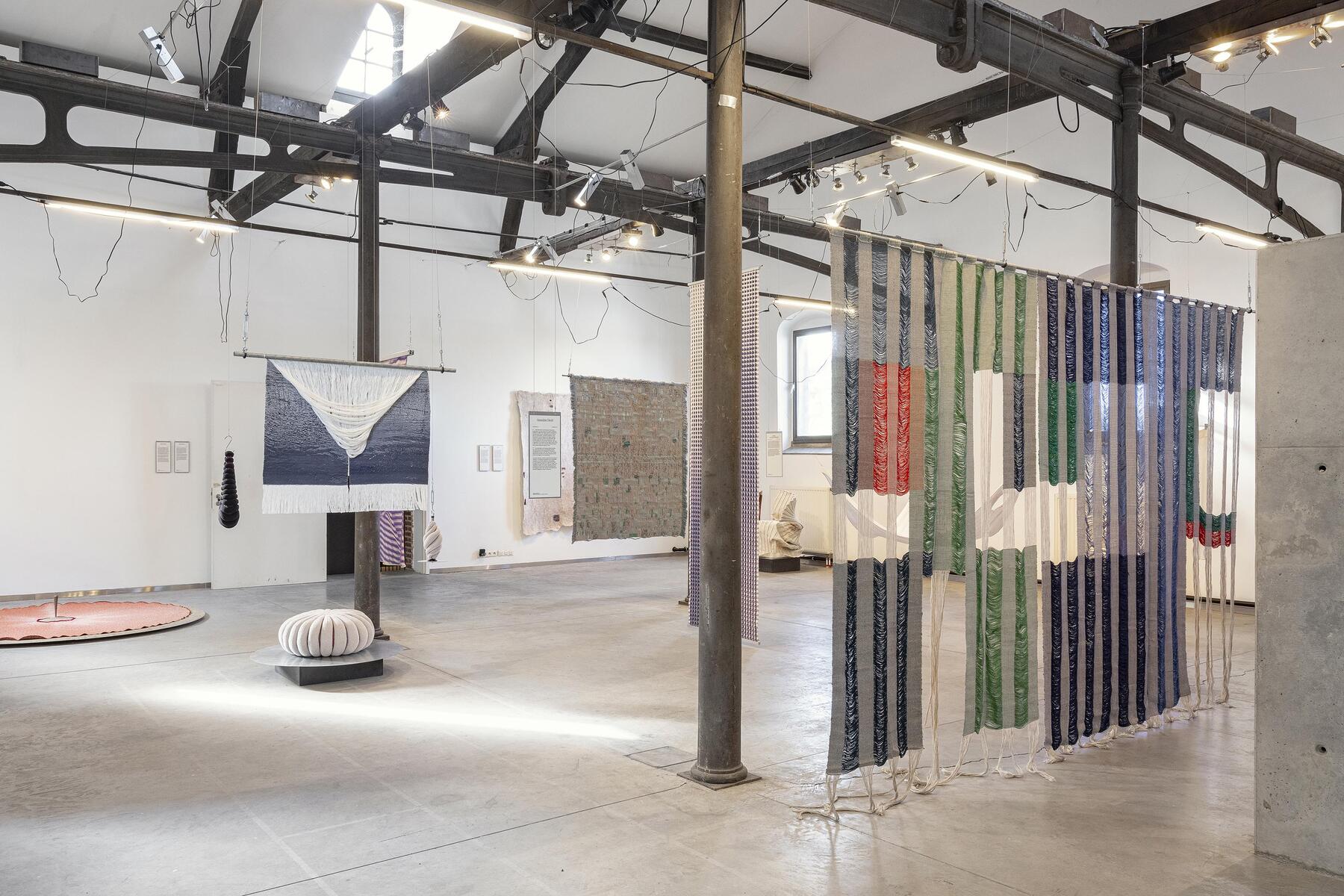


The textile design exhibition Woven Whispers was curated and organized by Belgium is Design for Milan Design Week 2025. Belgium is Design is a project initiated by the design promotion organizations Flanders DC, MAD Brussels and Wallonie-Bruxelles Design Mode to promote Belgian design on the international scene.
With Woven Whispers, Belgium is Design pays tribute to Belgium's rich textile history by bringing together projects that highlight experimentation and research into materials, while exploring their varied applications and product development. The selected designers and design studios are: Amandine David, Amandine Fabry, Charlotte Lancelot, Emma Cogné, Emma Terweduwe, Esther Van Schuylenbergh, Kato Herbots, La Gadoue, Minjung Kim, Morevi, Mathilde Wittock, Natalia Brilli, Rosie Broadhead, Sarah Carestia, Stefanie Everaerts, Xavier Servas.
The selection also includes a project by designer Juraj Straka created in partnership with Ibride France, a French company specialising in interior design and renowned for its daring product for over 25 years. This collaboration came about thanks to the D2B project, an annual initiative of Belgium is Design that encourages meetings between Belgian designers and international companies.
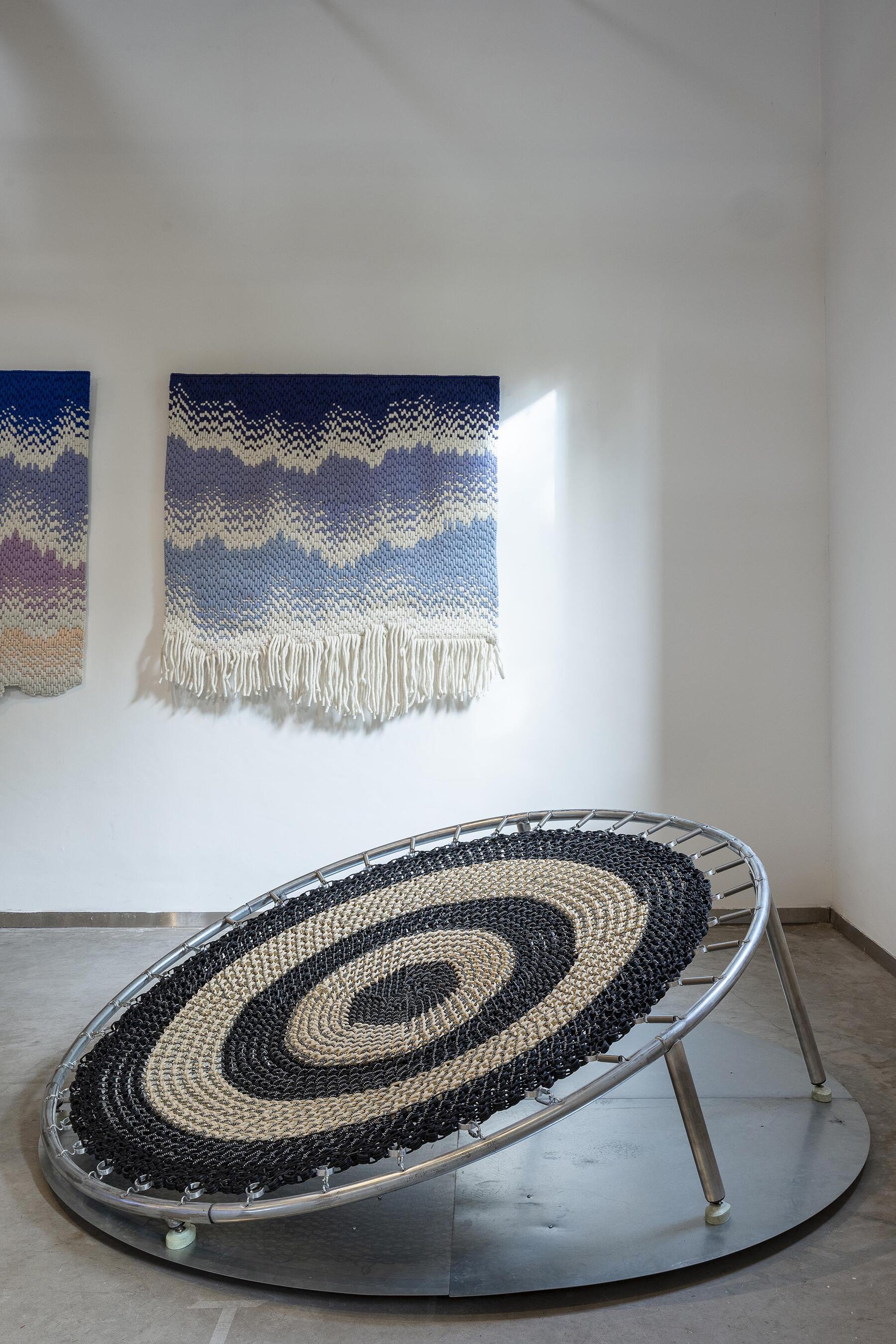
The exhibition showcases 18 textile designers and design studios selected through an open call, presenting a diverse range of creations— from unique handmade pieces to industrially produced textiles objects ready for large-scale distribution. Together, they present a cross-section of what Belgium has to offer in contemporary textile design, embracing experimentation along the way. The exhibition includes inflatable lamps made from pig intestines, hand-felted tapestries, and a rug crafted from recycled plastic sheathing. Ancient techniques are revitalized, digital tools are applied to analog processes to create surprising results, and the boundaries of the loom are explored, demonstrating that textile design often extends beyond two-dimensional surfaces. This approach frequently results in complex weave structures suitable for industrial production.
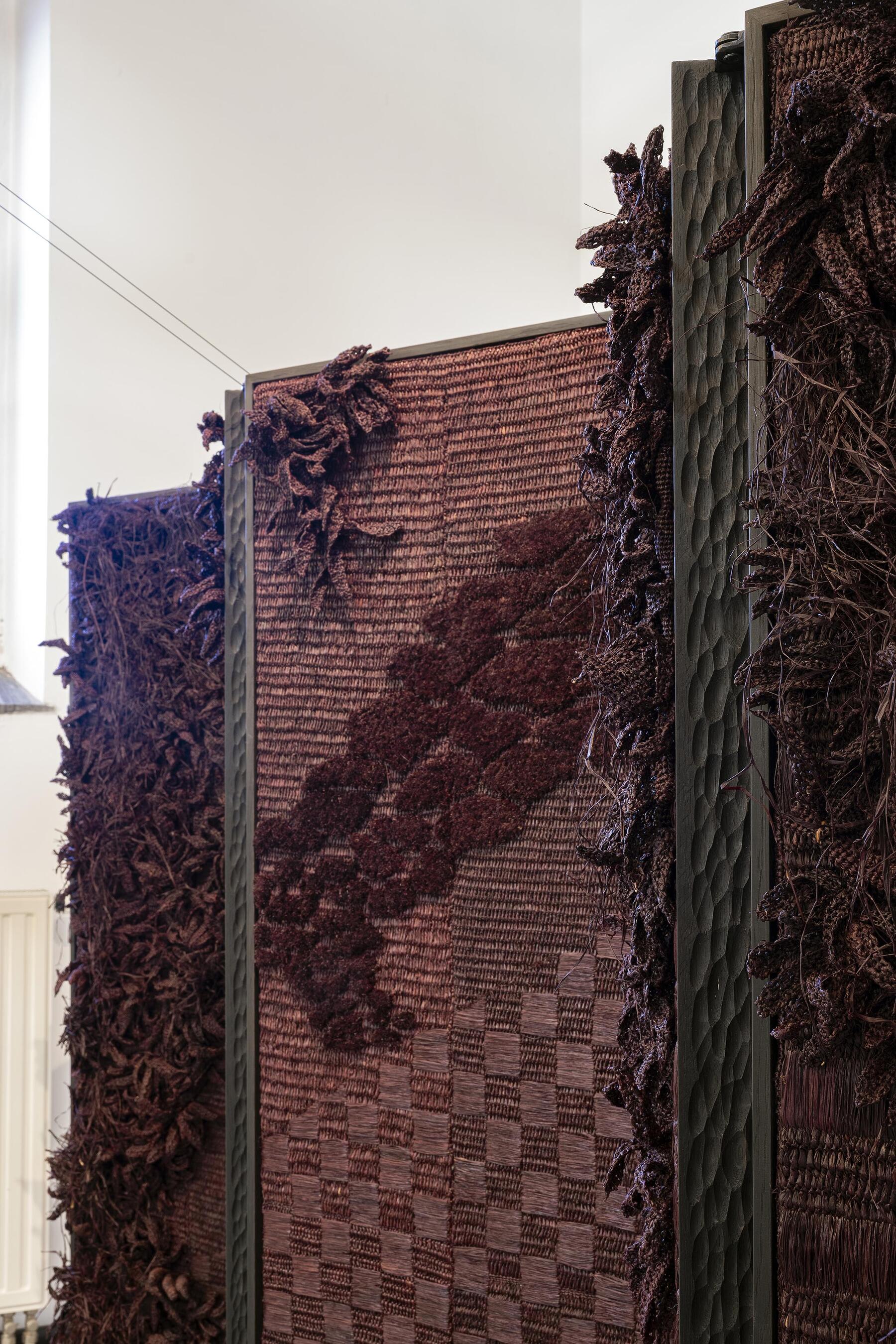
The range of materials used is equally diverse: from raffia, recycled leather, natural and sustainable materials to upcycled existing fabrics, plant roots, and textiles with bioactive components offering therapeutic benefits. The lightness and transparency of the fabric often contrast sharply with the complexity of the design. Alongside colorful, minimalist, luxurious, or expressive interior textiles for furniture, curtains, room dividers, flooring, and wall coverings, custom-made solutions are also showcased.